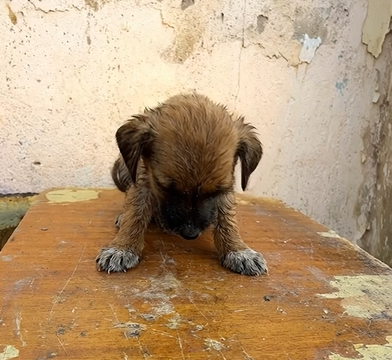
The little round bed sat on a bare wooden floor, its golden tan sides worn thin from use. Inside, a stained white blanket lay in loose folds. Two puppies pressed against each other on the fabric, their brown and tan coats almost blending together in the dim room.
Small white patches marked their chests. Dust clung to their thin, tangled fur, and their bodies looked fragile beneath it. They were close enough for their shoulders to touch, yet neither seemed comfortably settled. Their front paws braced against the blanket as they tried to keep their heads raised.
Their hind legs folded beneath them, trembling. Each puppy held her head low and slightly tilted, a posture that made even sitting appear difficult. When one shifted, the blanket rustled under both of them. They stayed together, two small bodies occupying only part of a bed that should have offered comfort.
No mother appeared beside them. No person sat nearby to steady them or respond to their cries. There was no food bowl or toy in view. The room held a bed and a blanket, but those objects alone could not provide the attentive care these puppies seemed to need.
Their appearance did not tell us how long they had been there. We could not know when they were last fed, who had brought them into the room, or what had happened before this moment. What was visible was enough to cause concern: two weak puppies trembling against each other.
The shaking continued through their shoulders and down into their paws. It disturbed the fur along their backs and made the blanket move beneath them. Their small chests rose and fell with breathing that sounded strained and uneven. They seemed unable to find a position where their bodies could rest easily.
A soft whimpering filled the quiet space. Every so often, one puppy gave a thinner, higher cry that faded before the other sounds returned. Between them came the faint movement of fabric and their difficult breathing. With little else happening in the room, those small noises became impossible to overlook.
A pet bed usually suggests something reassuring. We picture an animal sleeping safely, perhaps with a favorite toy tucked against its side. This bed held a different scene. The puppies were indoors and on a blanket, yet their condition showed that being inside was not the same as being well.
Then they began to lift their heads.
The movement was slow, their paws shifting beneath them as they turned toward the camera. Their dark eyes glistened in the dim light. Moisture marked their little muzzles, and they blinked while holding their faces forward. For a moment, their features were clearer above the rumpled blanket.
It was easy to imagine a question in those looks. Would someone stay? Would someone help? Those are words we bring to the scene because we want their discomfort to end. The puppies did not need to understand our words for their condition to deserve a careful response.
Their heads lowered again. They remained pressed together, trembling, before making another small effort to look up. One paw moved across a fold in the cloth. Another settled close beside it. These ordinary movements seemed difficult, drawing attention to how little strength they appeared to have available.
Anyone who has cared for a young animal knows the wish to make everything safe around it. We remember checking a sleeping puppy, listening for movement, or drawing a blanket closer on a chilly evening. Such memories make this quiet room feel painfully familiar, even when these puppies are strangers.
They deserved that same watchfulness. They deserved clean bedding, suitable nourishment, warmth, and attention to the weakness and breathing difficulties described here. Their needs could not be met by affection alone, although gentleness would matter in every part of helping them. Appropriate veterinary care belonged among those needs.
The closeness between them was touching. Each rested against the other, sharing contact in a room where no caregiver was visible. That contact may have offered some comfort, but it could not replace the care they depended on. They needed people capable of responding to what their small bodies were showing.
Many of us have known times when simply having someone nearby made a difficult hour more bearable. We remember the person who noticed our exhaustion or offered help without demanding an explanation. That memory can guide our response to an animal whose needs are clear even when its history is unknown.
The account does not establish what happened after this moment. It does not confirm a rescue, a recovery, or a family waiting for either puppy. We can hope for those outcomes without pretending to know them. Their condition matters in its own right, before any ending has been written.
Concern can become useful through practical steps. Contacting a rescue organization or veterinarian, giving accurate information, and supporting people able to provide care can help vulnerable animals reach assistance. Sometimes our role is direct; sometimes it is connecting someone else with the information or resources they need.
Remember the two brown and tan puppies on that worn white blanket, their small chests close together and their paws searching for steadier footing. They deserved to rest without struggling. May their story remind us that a quiet cry still deserves attention, and that noticing should lead us toward whatever thoughtful help we can offer.
For these two, comfort needed to become something dependable and real.