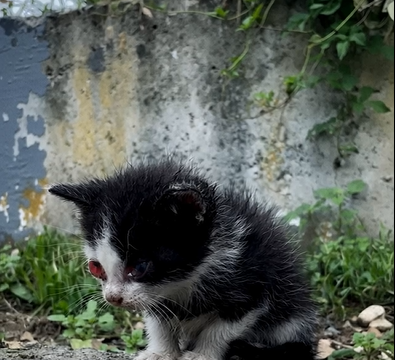
The orange and white kitten lowered her face toward her sibling and nudged gently. Beside her, the little black and white kitten remained still on the pavement. She touched the quiet body again, then shifted her trembling paws, staying close on a road that offered neither shelter nor comfort.
Her legs were thin and unsteady beneath her dusty coat. She stood with her head bowed, her tail hanging low behind her. Even maintaining that position seemed difficult. Yet she kept her face near her sibling, returning to the small body with movements that were tender to witness.
First came a nuzzle. Then a light touch of her paw, followed by another that appeared more insistent. There was no visible response. The black and white kitten did not stretch or turn toward her. No answering sound interrupted the quiet between them, and the orange kitten remained beside it.
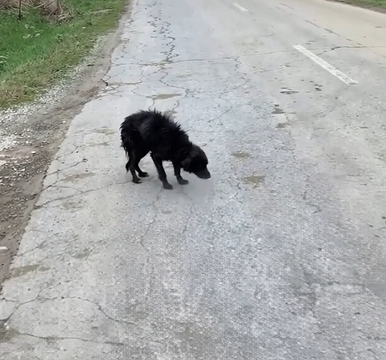
The pavement was cracked and weathered, bordered by loose gravel and dry dirt. A thin shadow from a wire crossed the ground. These were ordinary roadside details, easy to overlook, but they framed a scene that was anything but ordinary for the two small animals lying and standing there.
Cold daylight softened the colors around them. No person appeared beside the kittens, and no voice could be heard. The scene offered no explanation for how they had reached that road or what had happened beforehand. What it showed was one kitten responding to a companion who remained motionless.
The orange kitten’s coat was dull, and her small frame looked painfully thin. Her shoulders trembled, with the shaking continuing down into her paws. She braced herself against the uneven surface, occasionally shifting her weight as her legs bent beneath her. There was little ease in any movement she made.
Her breathing sounded strained and uneven. Her tiny chest rose and fell with effort while she remained close to her sibling. The sight drew attention to her own urgent vulnerability. Whatever had happened to the black and white kitten, the one standing over it also needed care.
A soft mewing continued from her, interrupted now and then by a thinner cry. The sound was fragile, barely carrying beyond the small space the kittens occupied. Her paws brushed the asphalt as she moved, adding faint scratches to the breeze passing over the otherwise quiet road.
Then she lifted her head.
Slowly, she turned toward the camera. Her eyes glistened as she blinked, and moisture marked her small face. She held her gaze toward the nearby presence for a moment, appearing tired even in that slight movement. Her body continued trembling while her paws stayed planted beside her sibling.
Her head lowered again until her face rested close to the still kitten. She paused there, then raised it once more. The sequence was simple and deeply affecting: returning to her companion, looking outward, and remaining near. Nothing about her actions needed embellishment to make the scene matter.
It is natural to recognize devotion in that closeness. We cannot know exactly what the kitten understood, or give her movements the same meaning they might have for a person. Still, her repeated contact was visible. She continued responding to the other kitten while showing clear signs of distress herself.
For anyone who has loved a sibling, a friend, or an animal companion, such a scene can touch a tender memory. We remember wanting an answer, staying nearby, or finding it difficult to step away. Those experiences help explain why watching this little kitten remain close feels so moving.
Her attachment did not make her physical needs any less pressing. She needed safety beyond the road, protection from the cold, and knowledgeable attention to her condition. The quiet kitten beside her also deserved a careful response. Both belonged within the concern of whoever could arrange appropriate assistance.
The supplied account does not describe an examination or establish what happened afterward. The black and white kitten’s stillness is distressing, but the scene alone cannot answer every question about its condition. We can acknowledge what was shown without inventing a diagnosis, a recovery, or an ending.
What remains unmistakable is the need for someone to respond. Sympathy can begin with a painful image, but an animal needs help that reaches beyond watching. Contacting an appropriate rescue organization, providing a clear location, and describing the visible circumstances can help connect concern with practical assistance.
Many of us remember kindness offered during a difficult moment. It may have been someone staying nearby, making a call, or helping us reach support we could not find ourselves. That memory can guide our response to vulnerable animals, whose needs may be communicated through little more than movement or sound.
We do not have to know their whole history before caring about them. An unfamiliar road, a faint cry, and a small body struggling to remain upright can be enough to deserve attention. Thoughtful action begins with taking those signs seriously and seeking help suited to the situation.
A safe place to rest and people willing to respond were needs that mattered more than any story we might imagine about their lives together.
Remember the orange and white kitten bending toward her companion, her paws unsteady against the pavement. Remember that both small lives deserved gentleness, whatever their circumstances. May their story encourage us to notice vulnerable animals beside familiar roads and help concern become action. No creature should be overlooked simply because its voice is quiet.