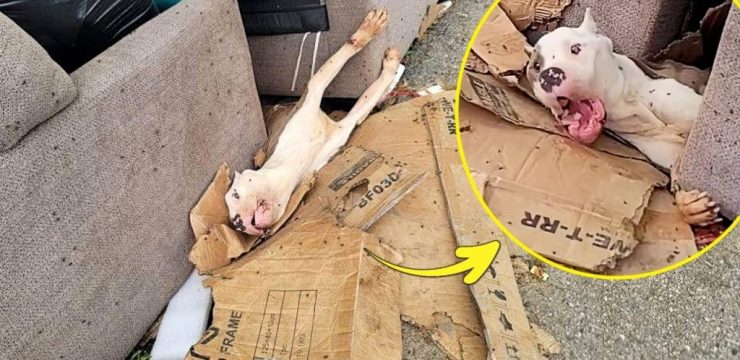
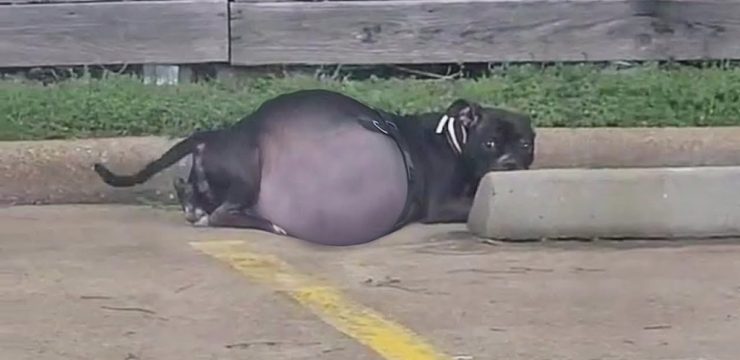
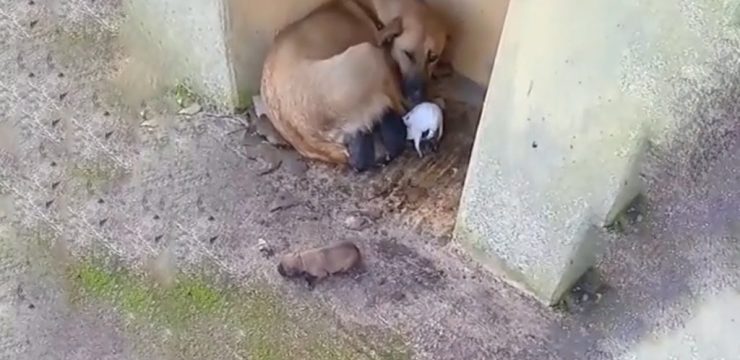
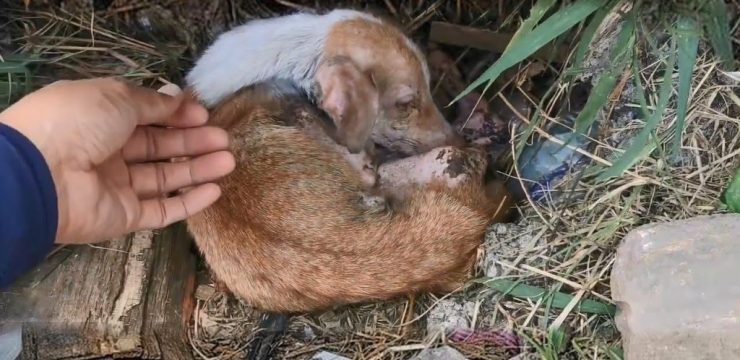
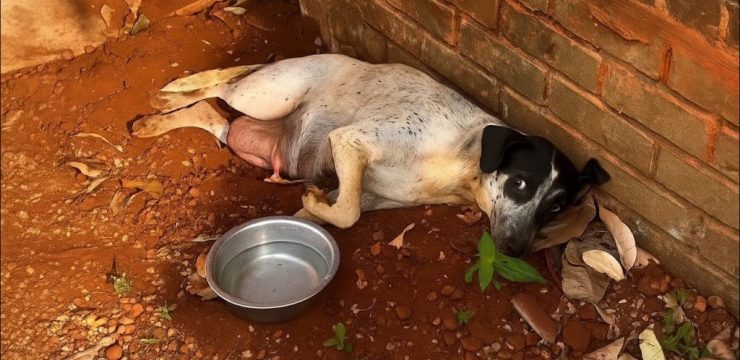
When Franny was first discovered at the crowded shelter, most people would have assumed there was nothing left to save. She sat curled tightly into the corner of a noisy kennel, trembling softly while chaos echoed all around her. Dogs barked endlessly. Metal doors slammed open and shut. Volunteers moved quickly from one enclosure to another. Yet Franny barely reacted to any of it. She looked as though she had disappeared somewhere deep inside herself, far away from the frightening world surrounding her.

She did not bark for attention. She did not wag her tail hopefully at passing strangers. She simply sat there in silence with defeated eyes that seemed to have stopped searching for kindness. Anyone who has ever loved a rescue animal understands that painful expression immediately. It is the look of a soul that has been disappointed too many times and no longer expects life to improve.
The woman who eventually rescued Franny later admitted that the decision happened instantly. The moment she saw the frightened little dog hiding against the wall, she knew she could not walk away. There was no long discussion or hesitation. Franny was leaving that shelter behind forever.
Still, bringing Franny home was only the beginning of an emotional journey that required extraordinary patience, compassion, and consistency. During the first few days, Franny wanted absolutely nothing to do with human interaction. She avoided eye contact completely and shrank backward whenever someone came too close. Sudden movements made her flinch hard. At times, she pressed herself so tightly against the wall that it almost looked as though she hoped to disappear into it.
For people who imagine rescue stories ending overnight with instant trust and joyful cuddles, Franny’s early days offered a much more honest picture of healing. Emotional wounds do not vanish quickly simply because an animal has finally reached safety. Fear built over months or years takes time to soften.
Then came one of the smallest but most important moments of all.
A bowl of food was quietly placed in front of her. No pressure. No loud encouragement. Just patience and gentleness. After several nervous seconds, Franny slowly leaned forward and began to eat. To some people, it may have seemed insignificant. But experienced rescuers understand exactly what that moment meant. A dog who still chooses to eat is a dog who has not fully given up. Somewhere beneath all the fear and heartbreak, Franny still carried the tiniest spark of hope.
Day by day, her rescuer continued offering calm reassurance. Gentle strokes across her back became part of their daily routine. A soft voice repeated the same comforting message again and again. You are safe now. Nobody will hurt you anymore. You are home.
Healing came slowly, but it came.
Franny gradually started eating more consistently, and the fragile hollows around her ribs slowly filled out as she regained healthy weight. The constant trembling that once seemed impossible to stop became less noticeable with each passing week. Her eyes, once distant and exhausted, began paying attention to the world around her again.
Then one beautiful morning, something happened that nearly brought her rescuer to tears.
Franny wagged her tail.
It lasted only a few seconds, but it felt enormous. That tiny movement represented trust returning after a very long absence. It was proof that the frightened dog hiding inside herself was finally beginning to come back.
As her confidence grew, daily walks became one of the happiest parts of her new life. Franny discovered the comfort of fresh air, quiet sidewalks, and peaceful afternoons exploring safe surroundings. She stopped walking with nervous hesitation and began moving forward with curiosity instead. Every new smell, every patch of grass, and every gentle breeze seemed to remind her that life could hold simple joys after all.
Playtime in the yard soon followed. Watching Franny run freely without fear became deeply emotional for everyone who had witnessed her earliest days. There is something incredibly moving about seeing an animal experience safety for perhaps the first time in its life. Little by little, she learned how to simply be a dog again.
Even bath time, which easily could have frightened her badly, became another meaningful victory. Franny stood quietly and bravely through the experience, slowly realizing that gentle hands no longer brought pain or fear. Animals who survive difficult lives often possess remarkable resilience once they finally understand they are protected.
One of the most touching parts of Franny’s recovery involved the other animals living in her new home. Slowly, she formed bonds with them that helped heal parts of her heart humans alone could not fully reach. She discovered the comfort of resting beside another dog, sharing space without fear, and feeling included instead of isolated.
As those connections deepened, Franny’s true personality finally began shining through. The scared, withdrawn dog from the shelter transformed into a gentle, playful companion filled with quiet happiness. Her rescuers realized that the loving dog they were now seeing had always existed beneath the fear. She simply needed enough patience and kindness to feel safe enough to emerge.
Today, many of the painful signs of Franny’s past have faded. The emotional walls she once built around herself have slowly been replaced with trust, comfort, and peace. She sleeps soundly through the night. She eats happily. She plays, cuddles, and enjoys the ordinary moments that once felt impossible.
Franny’s story is about far more than one rescued dog. It is a reminder of what can happen when someone chooses compassion instead of indifference. Healing may not happen quickly, and it may never follow a perfect path, but love and patience can change a life in extraordinary ways.
Franny did not need perfection or miracles. She simply needed someone willing to stay beside her long enough for her to believe in love again.
That decision ultimately changed everything for both of them.