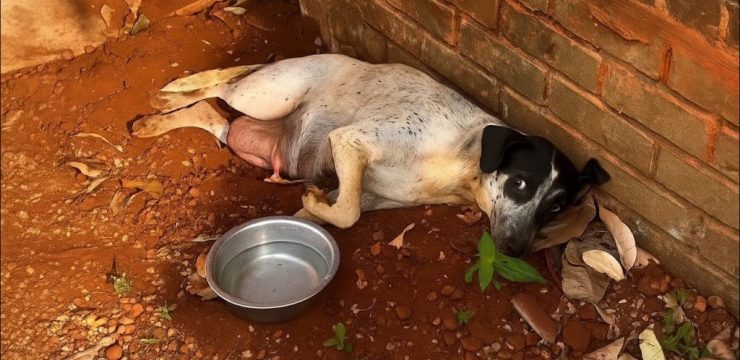
Millie was seven years old when the life she once knew suddenly disappeared. For years, she had trusted the people around her completely, believing she belonged beside them forever. Then one day, without explanation, she was abandoned. The heartbreak that followed was not loud or dramatic. It revealed itself quietly through fear, silence, and the desperate way she tried to make herself invisible.
Inside the shelter, Millie pressed her trembling body into the farthest corner she could find. She avoided every glance and every movement near her. Even the sound of footsteps caused her to shrink deeper into herself. She would not look anyone in the eyes. Outstretched hands terrified her. The world no longer felt safe, and the confusion inside her frightened heart became impossible to hide.

Dogs never truly understand why they are abandoned. They only know that the people they loved suddenly vanished. For Millie, that loss became overwhelming fear. Her spirit seemed to fold inward, protecting the small pieces of trust she still carried. Every passing day made her appear more unreachable. Shelter workers saw a frightened older dog who trembled constantly and refused connection. In overcrowded shelters, dogs like Millie are often overlooked because fear can easily be mistaken for hopelessness.
Eventually, her name was placed on the euthanasia list.
For many shelter dogs, that moment becomes the end of the story. Older dogs already face difficult odds, and fearful dogs often have even fewer chances of being saved. Millie’s future seemed painfully uncertain. She could have disappeared quietly without ever feeling safe again. But someone looked beyond the fear in her eyes and recognized that she was still worth saving.
A rescuer stepped forward and refused to let Millie’s story end there.
She was taken to a safe home where patience replaced pressure. Nobody demanded affection from her. Nobody forced her to socialize or behave differently before she was ready. Instead, she was given something she had not felt in a very long time: gentle space to breathe.
As her rescuer learned more about her condition, it became clear that Millie’s struggles were not only emotional. She tested positive for heartworm disease, a dangerous illness that can damage the heart and lungs if left untreated. She also suffered from arthritis in her back and knees, leaving her in constant discomfort. Physical pain had likely deepened her fear and withdrawal for a long time.
Veterinary treatment began carefully. Her heartworm disease was managed with monitored medical care, while medication and supportive treatment helped ease the pain in her joints. Slowly, her body began receiving the help it desperately needed. But emotional healing would take much longer.
Her rescuer understood that broken trust cannot be repaired overnight. Instead of forcing interaction, she allowed Millie to feel invisible whenever she needed. A crate became her safe place rather than a prison. Nobody dragged her outside. Nobody raised their voice. Food was left nearby, soft conversations filled the room, and calm daily routines continued around her. Little by little, Millie started watching the world instead of hiding completely from it.
Trust rarely returns through dramatic moments. More often, it grows quietly through consistency and safety. Over time, Millie’s trembling slowly lessened. Her breathing became calmer. Although she still avoided direct contact, she listened carefully whenever her rescuer spoke. From inside her crate, she observed every peaceful interaction, gathering evidence that this home was different from the life that had hurt her before.
Then one day, something extraordinary happened.
Millie stepped out of her crate on her own.
There was no leash pulling her forward and no one coaxing her with force. She simply placed one uncertain paw onto the floor, followed carefully by another. Her body remained stiff with caution, but she chose to move forward anyway. That small moment represented far more than physical movement. It was courage returning after fear had controlled her life for so long.
Soon afterward came another quiet but powerful sign of healing. Millie’s tail moved gently for the first time. It was not the excited wag of a carefree puppy. It was soft and cautious, almost as if she was testing whether happiness was safe again. Yet for a dog who once trembled at every sound, that tiny wag carried enormous meaning.
Healing often arrives in small steps instead of dramatic transformations. Millie slowly began lifting her head more often. She no longer shrank away from every movement nearby. She accepted gentle touch and allowed herself to sit closer to the people caring for her. The fear inside her eyes slowly gave way to curiosity. The world no longer seemed like a place she needed to hide from every moment of the day.
Stories like Millie’s remind people never to underestimate older dogs. At seven years old, she had already experienced deep emotional pain and physical suffering. Yet with proper medical treatment and unwavering compassion, she slowly rediscovered comfort, safety, and hope.
What ultimately saved Millie was not a miracle. It was patience, consistency, and love given freely without expectations. Her rescuer met her exactly where she was emotionally instead of rushing her progress. She understood that trust cannot be demanded. It must be earned gently over time.
Today, the frightened dog who once hid trembling in shelter corners has begun to shine again. Her journey stands as a powerful reminder that abandoned dogs are not beyond saving. With compassion, medical care, and steady kindness, even deeply wounded hearts can heal. Millie did not need to become a different dog to deserve life and love. She only needed someone willing to believe that joy was still possible for her, even after everything she had endured.
Her story now offers comfort to anyone who has ever felt forgotten or unwanted. Millie’s recovery proves that healing does not always happen quickly, but patient love can restore trust, dignity, and hope, even after life has caused wounds.