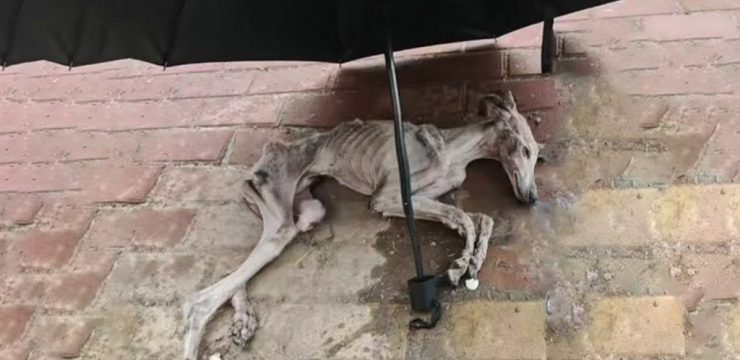
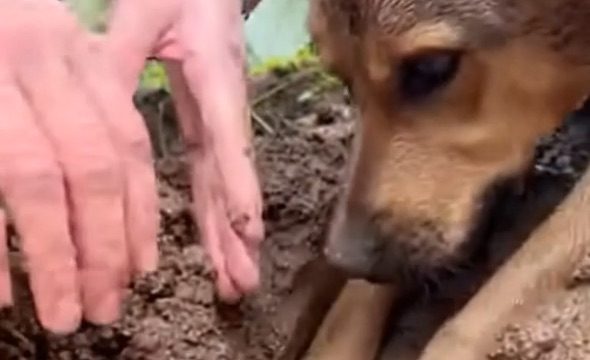
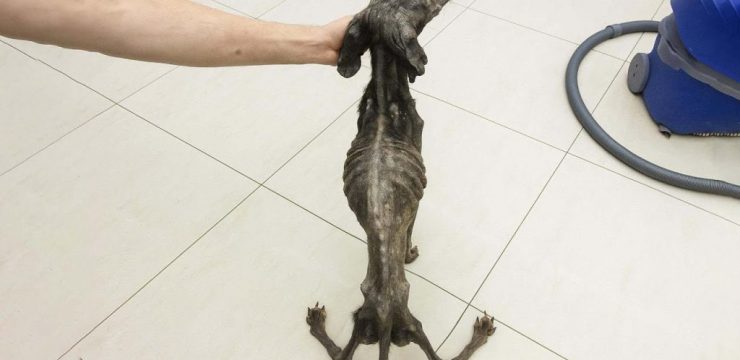
When rescuers first saw Gator, a pit bull from Highland, California, they were stunned into silence. The dog standing before them hardly looked alive. His frail frame was reduced to skin and bones, every rib sharply outlined beneath a dull, thinning coat. His legs trembled as if they might give out at any moment, and his head hung low, burdened by exhaustion and suffering. Yet even in that heartbreaking state, his eyes spoke volumes. There was fear, yes, and confusion, but also a faint, lingering hope that someone, somewhere, might finally notice him and care.
Gator’s story came to light when a concerned individual posted his photo online. That single act of compassion set everything in motion. The image spread quickly, capturing attention and stirring emotions across social media. Before long, a group of rescuers arrived at the property to investigate. What they found confirmed their worst fears. Gator had been living in neglect, alone in a barren yard with no comfort, no proper care, and very little food. His owner insisted that the dog’s condition was due to a mysterious illness, brushing off concerns as unnecessary worry.

But experienced rescuers knew better. They had seen the signs before. Gator was not suffering from an unknown disease—he was being starved. Labeled “aggressive” by his owner, he had been chained and isolated, denied even the most basic needs. It was a quiet kind of cruelty, the kind that happens behind closed doors, unseen and unchallenged—until now.
The rescuers pleaded with the owner to surrender Gator. At first, he resisted, unwilling to let go. But the team stood firm, refusing to leave without the dog. Eventually, the owner relented. That moment marked the end of Gator’s long ordeal and the beginning of a new chapter. As they gently lifted him into their vehicle, his body barely responded. It was as if he couldn’t yet comprehend that his suffering was finally over.
At the veterinary clinic, the full extent of Gator’s condition became painfully clear. His body condition score was a 1 out of 9, the lowest possible rating, indicating severe starvation. His paws were cracked and swollen from prolonged exposure to rough ground. His skin showed signs of irritation, and his ears were infected and tender. Yet despite everything he had endured, Gator showed no signs of aggression. When a veterinarian softly touched his head, he froze—not out of fear or anger, but confusion. It was likely the first gentle touch he had ever known.
His first bath was both emotional and symbolic. As warm water flowed over his fragile body, rescuers carefully washed away the dirt and neglect that had covered him for so long. At first, Gator seemed unsure, his eyes darting as if expecting harm. But as gentle hands continued to comfort him, something shifted. His breathing slowed. His muscles relaxed. For the first time in what may have been years, he felt safe.
In the weeks that followed, Gator began a transformation that felt almost miraculous. Day by day, small changes became visible. His appetite returned. His coat grew softer. His tail, once still and lifeless, began to wag ever so slightly. He started to trust the people around him, leaning into their touch, responding to kind voices, and rediscovering simple joys. A warm bed, a soft toy, a quiet moment of affection—these became treasures in his new life.
What touched everyone most was the change in his eyes. The emptiness that once reflected neglect and loneliness was slowly replaced with a gentle light. There was strength there now, and something else too—gratitude, perhaps, or even forgiveness. Gator’s journey became more than a rescue story; it became a reminder of the healing power of compassion.
Though his recovery is ongoing, Gator has proven himself to be incredibly resilient. His skin condition will require continued care, and his journey is far from over. But he is stronger now, both physically and emotionally, ready to face whatever comes next. The veterinarians and rescuers who cared for him often say that Gator taught them something profound—that even in the darkest moments, kindness can spark the will to live again.
The day Gator left the hospital was unforgettable. As he stepped outside, sunlight warmed his coat, and his tail wagged with a confidence no one had seen before. Waiting for him was a loving foster family, ready to give him the life he had always deserved. For the first time, Gator could rest without fear. He curled up on a soft blanket, let out a deep, peaceful sigh, and fell asleep—safe, warm, and finally loved.
Today, Gator continues to grow stronger. He is learning to trust fully, to embrace affection, and to enjoy the simple pleasures of being a dog. Daily walks, playful moments, and gentle voices have become part of his routine. Each day brings a little more peace, a little more joy, and a deeper sense of belonging.
His story is a powerful reminder that compassion matters. Behind every rescue is a group of people who refuse to look away, who choose to act instead of ignore. Gator’s journey shows how one act of kindness can ripple outward, changing not just one life, but many. His resilience stands as proof that even after unimaginable hardship, healing is possible.
Some stories stay with us because of their hope, and Gator’s is one of them. Once forgotten and left to suffer, he now stands as a symbol of what love and care can achieve. His journey from despair to safety is not just about survival—it is about the strength of the spirit and the power of compassion. In Gator’s story, we are reminded of the best of what humanity can be.