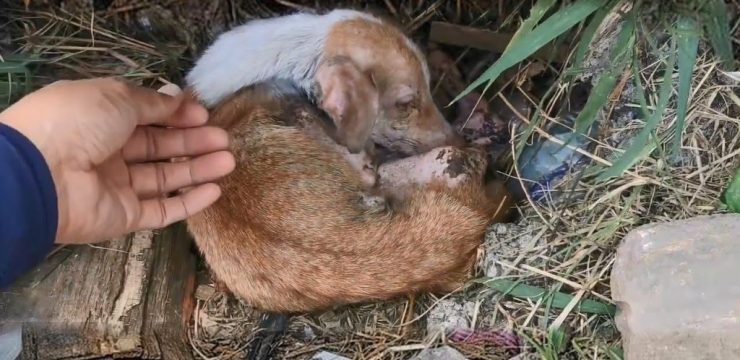
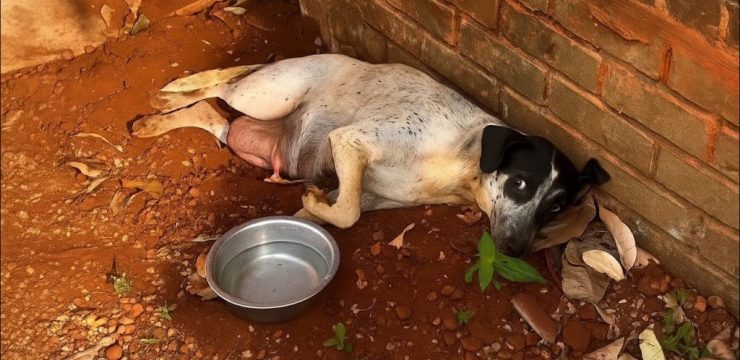
Matty’s story begins in a place no living creature should ever have to endure, a harsh and unforgiving stretch of life where survival depends on sheer will alone. He was a stray dog, thin to the point of fragility, wandering unfamiliar streets in search of anything he could eat. Hunger pushed him forward day after day, guiding his steps into dangerous situations where kindness was nowhere to be found. Instead of a helping hand, he encountered cruelty. While searching for scraps, stones were thrown at him, leaving his small body injured and his spirit shaken. Each moment became a fight to survive, and each breath carried the weight of fear.

By the time rescuers found him, Matty’s condition was heartbreaking. His body told a story of prolonged neglect and suffering. One of his front legs had been so badly damaged that it could no longer be saved. A deep, painful wound stretched across his neck, raw and untreated. His skin was inflamed and infected, the result of disease that had gone unchecked for far too long. He was weak from starvation, exhausted beyond measure, and deeply afraid. His life had taught him a difficult lesson—that human hands often brought harm instead of comfort.
When help finally arrived, Matty did not respond with relief. Instead, he reacted with fear. He growled softly and tried to pull away, unsure of the intentions of those reaching out to him. For many people who have spent years loving animals, this reaction feels familiar and deeply moving. Pain leaves its mark, not only on the body but on the heart. In Matty’s eyes, there was both confusion and sorrow, as if he could not understand why his world had been so unkind.
The rescue team quickly realized that saving him would not be simple. His injuries required immediate attention, but his body was too fragile for major surgery. The damaged leg needed to be amputated to prevent further infection and suffering, yet his bloodwork revealed dangerously low levels. He simply did not have the strength to endure such a procedure. Waiting was not a choice, but a necessity.
Those first weeks became a turning point in Matty’s life. Rather than rushing into surgery, the team focused on helping him regain strength. Antibiotics were carefully administered to fight infection, while vitamins supported his weakened immune system. Most importantly, he was given nourishing, high-calorie meals designed to rebuild his strength. To everyone’s relief, Matty ate with quiet determination. Each meal became a sign of hope, a small but meaningful step toward recovery.
Slowly, changes began to appear. His eyes, once clouded with pain, started to clear. His body grew a little stronger with each passing day. Wounds that had once seemed overwhelming began to heal under attentive care. Yet the most touching transformation was not physical. One day, after weeks of patience and gentle handling, Matty’s tail moved ever so slightly. It was hesitant, almost uncertain, but it was there. That single wag spoke volumes. It marked the beginning of trust.
Trust, however, is not something that returns overnight. It requires time, consistency, and a sense of safety. The rescue team understood this and moved at Matty’s pace. They spoke softly, approached him gently, and allowed him to feel in control. For those who understand that healing often unfolds slowly, this part of his journey carries a quiet truth. Real recovery is not dramatic. It is built through small, steady moments of care.
In time, Matty grew strong enough for the surgery he so desperately needed. His blood levels improved, and his body was finally ready. The procedure was performed with great care, removing the damaged limb that had caused him so much pain. While it may seem like a difficult decision, it was an act of compassion—one that freed him from constant suffering.