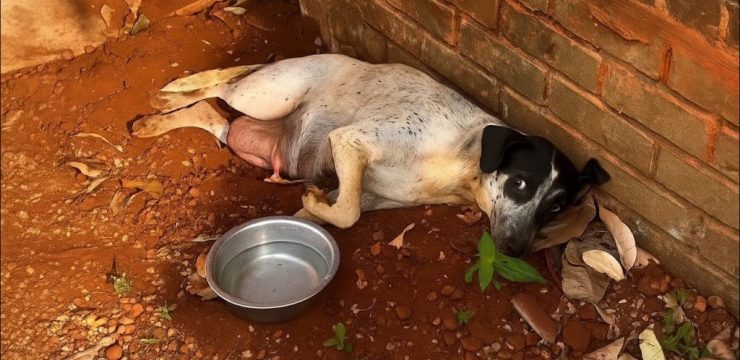
Hongyu was once a proud guardian, the kind of dog who stood watch with quiet devotion and took his job seriously. Day after day, he stayed close to the home he was meant to protect, loyal to the people he believed were his family. But everything changed when they moved away. Instead of bringing him along, they left him behind—alone at an empty house, chained to a corner as if his life no longer mattered. Under the blazing sun, with no steady food or clean water, Hongyu’s world became painfully small: a short stretch of chain, hot ground beneath him, and long hours of silence.
At first, days passed in confusion. Then they turned into weeks of waiting. The home he once guarded stood quiet and lifeless, yet Hongyu remained there, trapped and forgotten. The chain around him did more than hold him in place—it became a symbol of abandonment. It meant he could not search for shade. He could not walk to find water. He could not escape the heat that beat down on him from morning to evening. Each day took something from him: his strength, his comfort, and little by little, his hope.

The sun was relentless, burning his skin until it became raw and painful. Food came only in rare scraps, and even that eventually stopped. With no one around to notice his suffering, Hongyu endured hunger and thirst in complete isolation. There was no shelter to protect him, no gentle hand to offer reassurance, no voice calling his name. Just heat, emptiness, and the slow, frightening feeling of being forgotten.
Everything might have ended there if not for one neighbor who couldn’t look away. This person saw what was happening day after day and felt the weight of it in their heart. At first, the neighbor tried to help in the simplest way possible—by offering to buy Hongyu from his owner. It wasn’t about money or pride. It was about saving a living creature from misery. But the owner refused, insisting Hongyu should remain to guard the property, even though the house was empty and no one lived there anymore. The neighbor, heartbroken and helpless, continued to worry until it became clear that Hongyu might not survive much longer. That’s when they made the call that would change everything.
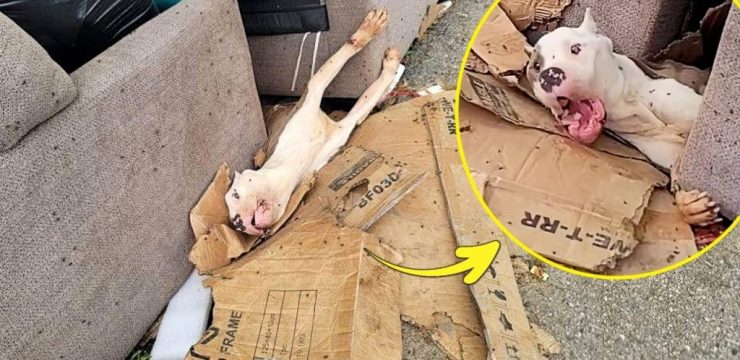
When rescuers finally arrived, the sight was difficult to take in. Hongyu, once a strong and capable dog, had become painfully thin. His ribs showed clearly beneath his skin, and his body was marked with sores and patches of sun-damaged skin. He lay nearly motionless, his breathing shallow, his eyes barely responding. He wasn’t just tired—he was dangerously close to losing the fight altogether.
The rescue team moved quickly, focusing on what mattered most in that moment: keeping him alive. They began by cooling his overheated body, carefully placing water-soaked towels over his sun-scorched skin. They spoke softly to him, even though they didn’t know if he could truly hear them. Still, they wanted him to feel something gentle, something human, something safe. With patience and care, they lifted him and brought him away from the place that had nearly taken his life.
Back at the rescue facility, Hongyu’s recovery started with the basics: hydration, nourishment, and rest. He was offered clean water, then a small meal. To everyone’s surprise, he ate with real determination. Even in such a fragile state, his will to live was still there. That single act—taking food, swallowing, choosing to keep going—felt like a spark in the darkness. It was a sign that his story might not end in tragedy.
Over the following days, the team fed him small portions of nutrient-rich food, allowing his weakened body time to adjust. His system had been deprived for so long that rushing the process could have done harm. Instead, they treated him with steady, thoughtful care. Each meal was a step forward. Each drink of water was another chance for his body to rebuild. The most urgent concern, however, was his damaged skin. Long exposure to the sun and months of neglect had left him with painful wounds that needed daily attention.
Medicated baths became part of Hongyu’s routine. They were gentle, meant to soothe rather than overwhelm him. The water helped clean his sores and ease the irritation, and afterward, a healing ointment was carefully applied to reduce inflammation and support recovery. Through it all, Hongyu never resisted. He stood quietly during each bath, accepting the hands that cared for him as if he understood they were trying to help. For a dog who had been abandoned so completely, his ability to trust again was almost unbelievable.
As days turned into weeks, small changes began to appear—then bigger ones. His wounds slowly started to close. The raw patches on his skin softened as healing took hold. His eyes, once dull and distant, grew brighter. And one day, something happened that made every volunteer stop and smile: his tail gave a small, hesitant wag. It wasn’t a big celebration, not yet. It was more like a question, a quiet sign that he was beginning to believe in life again.
Hongyu’s strength returned step by step. He learned to walk with purpose again, moving carefully at first, then with more confidence. Volunteers quickly noticed his gentle nature. He wasn’t aggressive. He wasn’t difficult. He was calm, obedient, and deeply sweet, as though kindness had always been in him, waiting for the right moment to come back out. He allowed people to approach him, to touch him, to care for him. In his own quiet way, he seemed to be saying, “I’m still here. I’m still trying.”
Nutrition played a major role in his comeback. Hongyu was given a specialized diet designed to help him gain weight and rebuild muscle. Slowly, his frail body began to fill out. His posture improved. His energy increased. Over time, his fur started to grow back in soft patches, covering skin that had once looked hopelessly damaged. The wounds that had defined his appearance were replaced by healthier, stronger skin. His transformation was not only physical—it was emotional. The haunted look in his eyes faded, replaced by curiosity and a growing sense of peace.
Perhaps the most remarkable part of Hongyu’s journey was not just that he survived, but that he kept his spirit. He had every reason to fear people. He had every reason to shut down and refuse connection. Yet he didn’t. In the simplest, most powerful way, he forgave. He accepted love when it was offered. And by doing so, he reminded everyone around him that healing is about more than medicine or food. Healing begins with compassion—the kind that refuses to look away.
Hongyu’s story, sadly, is not the only one of its kind. Across the world, countless animals suffer quietly, hidden in backyards, empty lots, or forgotten corners, waiting for someone to notice. But his journey stands as a reminder of what can happen when one person decides to act. A neighbor who could not ignore what they saw. A rescue team that responded with urgency and care. Volunteers who offered patience, tenderness, and time. Each small choice became part of a lifeline.
To those who follow his story, Hongyu is more than a rescued dog. He is proof of quiet endurance. He is a symbol of loyalty that deserved better, and a second chance that arrived just in time. His recovery reminds us of something simple and lasting: neglect can harm the body, but love still has the power to mend the heart. And no act of compassion is ever too small to matter.