It was a brutally cold morning when a call reached a small local dog rescue, the kind of morning when the air seems to cut through skin and silence feels heavier than usual. A concerned man had been passing an abandoned factory when he noticed a dog tied near the entrance, lying completely still on the frozen ground. From where he stood, he couldn’t tell if the dog was alive or already gone. The stillness was unsettling, and something deep inside him said he couldn’t just walk away. He made the call, uncertain whether help would arrive in time.
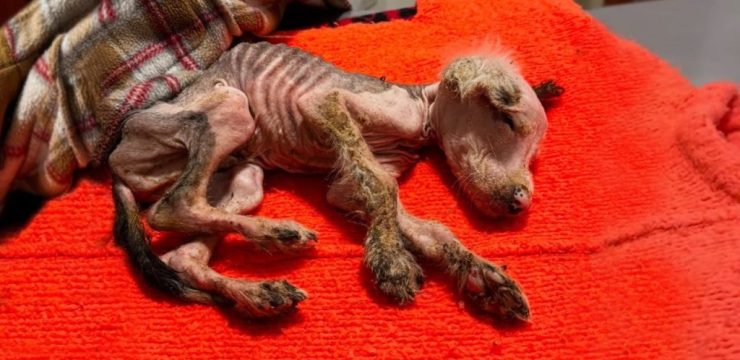
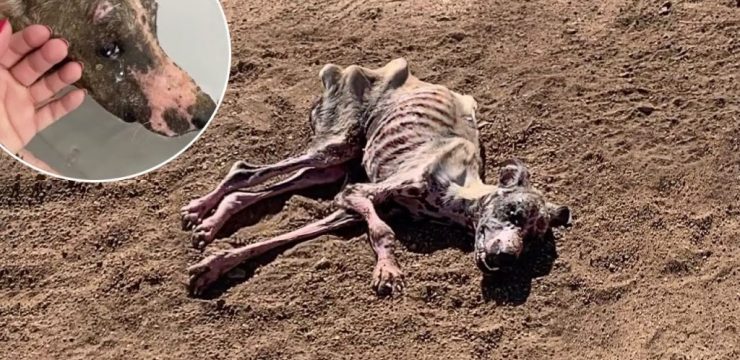
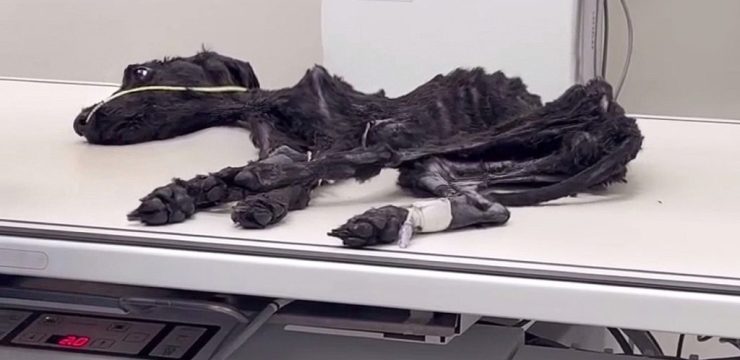
The rescue team responded without hesitation. When they reached the factory, the reality before them was even more painful than expected. The dog was old, his fur badly matted, his body thin and stiff. His eyes were clouded with age, and he couldn’t lift his head or shift his weight. His breathing was shallow, barely visible in the cold air. It was clear he had been lying there for a very long time. The team gently wrapped him in a warm blanket and rushed him to the clinic, carrying both urgency and quiet hope with them.

At the clinic, the staff moved quickly and carefully. They named him Lucky, though at that moment, luck seemed far from his story. Years of neglect had taken a devastating toll on his body. Medical exams revealed deep, infected bedsores caused by lying on hard surfaces for extended periods without the ability to move. His vision was almost entirely gone due to advanced cataracts. Most concerning of all was a severe Stage 3 heartworm infection, a life-threatening condition that had clearly gone untreated for years.
As the rescue dug deeper, a nearby resident shared what he knew. Lucky had reportedly been chained outside that factory for nearly three years, often without consistent food or water. Before that, his life had been one of confinement as well, totaling an estimated fourteen years of isolation. No walks, no affection, no sense of safety. Just long days and longer nights spent waiting, unseen and unheard.
The volunteers were overwhelmed with sadness and disbelief. It was hard to understand how someone could leave a living creature to endure such a lonely existence. But anger would not help Lucky now. What he needed was compassion, comfort, and dignity. Given his age and medical condition, no one expected a full recovery. Years of immobility had weakened his spine, and the damage could not be undone.
Still, giving up was never an option.
The team chose to focus on palliative care, not chasing a miracle, but offering Lucky a life filled with warmth and kindness for however long he had left. They wanted him to experience safety and love, things he had been denied for most of his life.
As part of his care, they introduced acupuncture to help reduce pain and encourage nerve response. He was given soft, nutritious meals, carefully prepared to meet his needs. Volunteers spent hours beside him, speaking gently, letting him know through touch and tone that he was no longer alone. At first, Lucky seemed unsure, distant, as though he was waiting for the kindness to disappear.
But slowly, something began to change.
After several treatments, the swelling in his spine eased slightly, and he began to regain some sensation in his legs. Encouraged by this progress, the team fitted him with a supportive walking harness designed to help him bear weight safely. The first attempts were unsteady. His legs trembled, and he hesitated, unsure of what his body could do anymore. But he tried, again and again.
With each small step, the room filled with quiet encouragement. Over time, Lucky began to move forward with determination. His walk was slow and careful, but it was his. He was rediscovering movement, purpose, and a reason to keep going.
Soon, Lucky was exploring the clinic halls. His tail wagged softly. He began to bark, first timidly, then with growing confidence. Staff members smiled, some with tears in their eyes, as they heard his voice for the first time. One volunteer described it as the sound of a spirit waking up after years of silence.
Lucky’s transformation went beyond physical improvement. Emotionally, he blossomed. He greeted visitors, sniffed corners, and sought out sunny places to rest. He was no longer invisible. He was loved, cherished, and seen.
Although his future remained uncertain, one truth was undeniable: Lucky’s past no longer defined him. He had people who showed up every day, reminding him that he mattered. His story became a symbol for countless senior dogs overlooked because of age or illness.
Lucky spent much of his life in chains, but in his final chapter, he learned what freedom felt like. Freedom to trust, to move, to feel joy. His life did not end in pain, but in care, dignity, and love.
His journey stands as a reminder that second chances matter. That no dog is too old or too broken to deserve compassion. And sometimes, healing isn’t about running freely, but about one gentle step, one quiet bark, and one warm bed at a time.