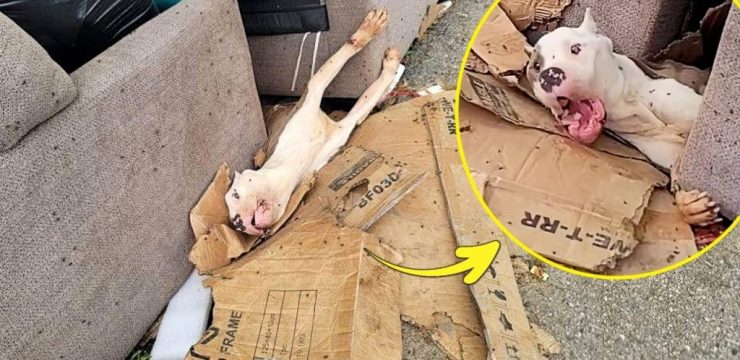
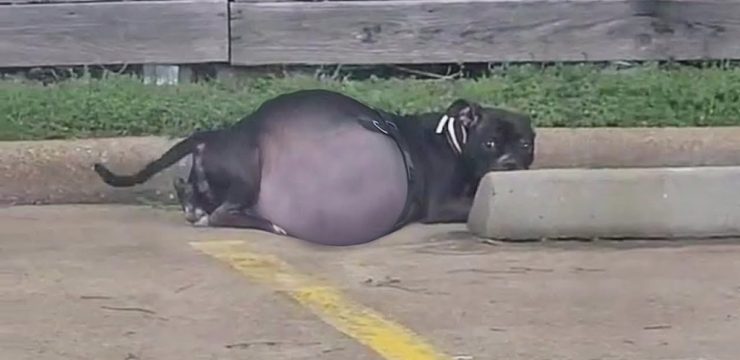
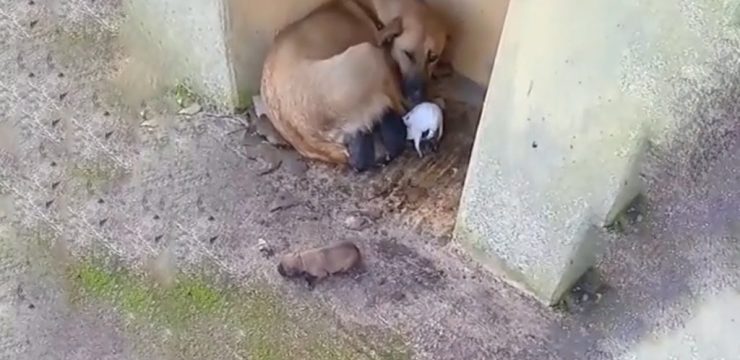
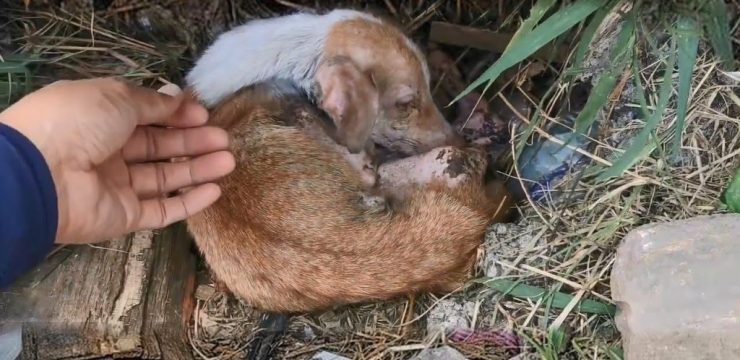
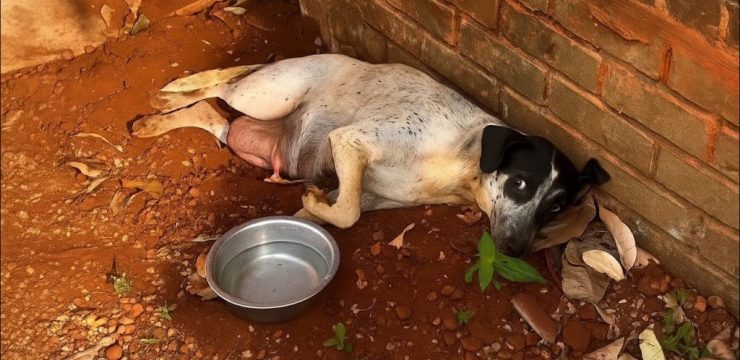
Walter didn’t look like a dog anyone believed would survive. When he first appeared along the edges of a quiet village, those who caught a glimpse of him described something almost ghost-like. He moved slowly and carefully, as if every step had been learned through hardship. His body spoke clearly without a single sound. It told of hunger, exhaustion, and a long history of being alone. Whenever someone tried to approach, he would retreat, keeping his distance, choosing survival over connection as he made it through one more uncertain day.

For several days, a small rescue team followed him from afar. They paid close attention to his movements, learning his patterns and the places he wandered. They understood that helping him would require patience and care, not force. Walter had every reason to fear human contact, and rushing toward him would only push him further away. So they waited, moving gently, giving him space, and slowly building a presence he could begin to accept. It was not easy, and there were moments when progress felt almost impossible. But patience, consistency, and quiet compassion eventually made a difference. After multiple attempts, they were finally able to bring him to safety.
What they discovered up close was more heartbreaking than they had imagined.
Walter was suffering from an extreme case of mange, one of the most severe conditions the rescuers had ever encountered. His skin was inflamed and delicate, with almost no fur left to protect him. It was clear that he lived in constant discomfort. Even the simplest movements seemed to require effort. His body was painfully thin, showing just how long he had gone without proper nourishment. His eyes, deep and tired, carried a quiet heaviness, as if he had endured more than any living creature ever should.
And yet, even in that fragile state, something remained. There was a faint spark, small but undeniable, that had not gone out.
The rescue team knew that helping Walter would take more than basic care. His recovery needed to be thoughtful, structured, and carefully managed. They began with nutrition, understanding that his body had been deprived for far too long. He was gradually introduced to nourishing meals, including organic bone broth and a high-protein diet designed to rebuild his strength without overwhelming him.
At the same time, his internal health required attention. Specialists added natural supplements, including mushroom extracts, to support his immune system. His body was gently guided through a detox process to help remove built-up toxins and support kidney function. Every step was taken with care, ensuring his fragile system could adjust at its own pace.
Perhaps the most visible part of Walter’s recovery was his skin. Treating his mange required steady, consistent care. He received regular medicated baths that helped cleanse his damaged skin and eliminate parasites. After each bath, soothing ointments were carefully applied to hydrate and repair areas that had become dry and irritated. It was not a quick process. Healing takes time, especially when neglect has lasted so long.
In the beginning, even these simple treatments seemed exhausting for him. He would stand quietly, allowing the team to help, as though he understood that these unfamiliar routines were meant to bring relief. Slowly, something began to change. His body started to respond. The inflammation eased, and his skin began to settle.
Then came the first signs of real progress.
A soft layer began to return where there had once been only irritation. His posture grew steadier. His eyes, once distant and guarded, began to show curiosity again. These changes were small and easy to overlook, but they carried deep meaning for those who had been watching closely.
Weeks passed, and each day built upon the last. Walter’s strength continued to grow. His weight improved, and his coat, once nearly gone, began to return in gentle patches, slowly covering the areas that had been exposed for so long. With each sign of physical healing, his spirit followed.
What stood out most was not just his physical transformation, but the emotional one.
Walter began to trust.
He leaned into gentle hands instead of pulling away. He rested without constantly watching for danger. There was a quiet sense of relief in the way he moved, as if he was finally allowing himself to believe that he was safe. That he no longer had to run.
After six weeks of dedicated care, the change was undeniable. The dog who once seemed to be fading had become stronger, calmer, and full of life again. His eyes were brighter, his movements more confident, and his presence carried a sense of peace that had once seemed impossible.
It is easy to focus on the before and after of a story like Walter’s, but the true meaning lies in everything in between. It lives in the patience, the consistency, and the belief that even in the most difficult circumstances, healing can happen.
Walter’s journey is not just about survival. It is about what becomes possible when compassion meets commitment. It is about the quiet strength that exists within even the most vulnerable lives, waiting for the right moment and the right care to bring it back into the light.
And perhaps most importantly, it reminds us that no matter how far something has fallen, there is always hope for renewal, and always a chance to rise again.