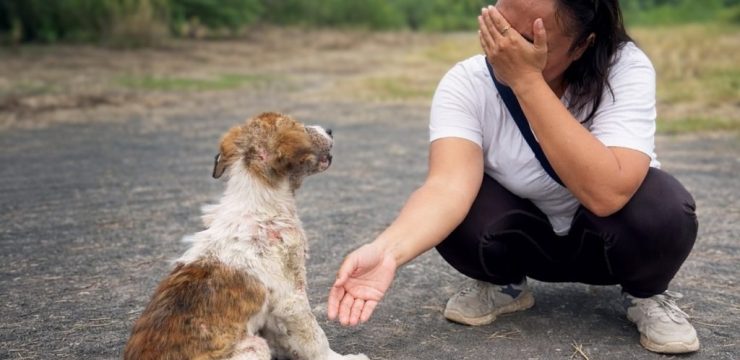
Graf’s story pierces the heart and lingers in the soul, a powerful reminder of resilience, betrayal, and the quiet strength that emerges when compassion steps in where others turn away. It is not just the story of a dog, but of choices made in moments of crisis, and of how kindness can rebuild a life that seemed beyond saving.
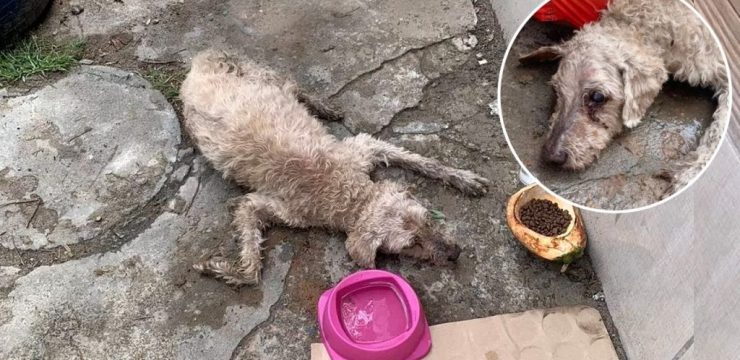
Graf was discovered lying motionless in a shallow roadside ditch, his body curled tightly as if trying to shield itself from the cold. He was soaked through, trembling, and unable to move. Around his neck hung a collar, worn and silent, unmistakable evidence that he once belonged to someone. He had known a home, a human voice, and the comfort of being wanted. Yet there he lay, abandoned and helpless, exposed to freezing water and fading strength. When the rescue team arrived, their urgency was clear. They approached carefully, hearts racing, unsure if they were already too late. With gentle hands, they wrapped him in a blanket and lifted him out, knowing every moment could mean the difference between life and loss. Graf’s eyes told a painful story of exhaustion and surrender, as though he had already prepared himself for the end. 
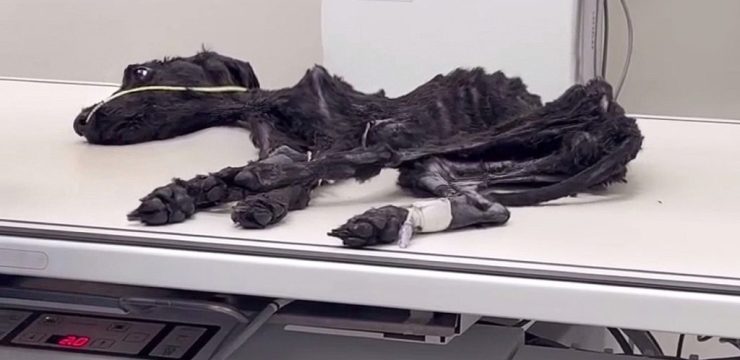
At the veterinary clinic, the situation grew even more serious. The lower half of Graf’s body was cold and unresponsive, and the shape of his spine immediately raised alarm. X-rays confirmed the worst fears. Graf’s spine had been fractured in two separate places. The diagnosis was devastating. One veterinarian spoke honestly, explaining that Graf had only a one percent chance of ever walking again. Surgery was his only option, and even that came with no guarantees. It was a gamble fueled by hope rather than certainty.
Still, no one walked away. The shelter team stabilized Graf and refused to let despair dictate his future. In a final attempt to change the outcome, they located his owner. For a brief moment, hope flickered. The man seemed relieved to hear Graf had been found alive. But when he learned about the extent of the injuries, the cost of surgery, and the long recovery ahead, his tone shifted. He agreed to cover the operation but made his position painfully clear. He did not want a disabled dog. Not now, not ever. The call ended, and he never reached out again.
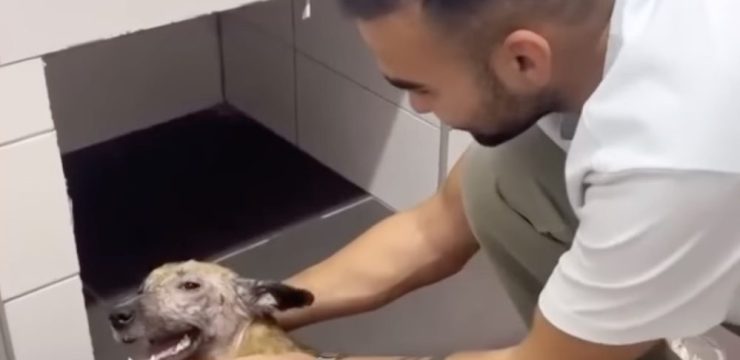
There was no time to dwell on betrayal. Graf needed action, and action is what he received. The surgery lasted three intense hours. Veterinarians worked with precision, carefully stabilizing his spine with metal supports. When it was over, Graf was monitored closely, surrounded by watchful eyes and hopeful hearts. Day by day, small changes appeared. The trembling eased. His breathing steadied. He began responding to gentle voices and soft touches. Visitors noticed something remarkable. Despite everything, Graf’s spirit remained intact. He still leaned into affection, still sought connection, and still wanted to trust.
The shelter staff celebrated every small victory. A slight tail wag. A lifted head. A quiet nuzzle against a familiar hand. Graf revealed himself to be affectionate, calm, and deeply loving. Staff members spoke to him tenderly, calling him their beautiful boy, and joking that he had gained many new mothers along the way. Those words carried truth. Graf was no longer alone.
Physical recovery remained a challenge. Graf could not walk unassisted, so the shelter arranged for a custom wheelchair built specifically for him. When it arrived, uncertainty filled the room. No one knew how Graf would respond. Carefully, they placed him into the frame. What happened next moved everyone to tears. Graf understood immediately. The moment he felt the support beneath him, he ran. Not cautiously, not fearfully, but with joy. His ears bounced, his tail wagged, and his face lit up as he moved freely again. It was as if a piece of his life had been restored.
Weeks turned into months, and Graf continued to thrive. He made friends with other dogs at the shelter, many of whom had their own painful pasts. Together, they formed a quiet community of survivors. Graf learned his new routines with confidence and became a favorite among volunteers and visitors. His determination inspired everyone who met him.
What makes Graf’s journey unforgettable is not just his physical progress, but his emotional resilience. He was left behind when he needed loyalty the most, yet he never allowed that betrayal to harden his heart. Instead, he chose trust. He chose love. And love, returned in abundance.
Today, Graf remains at the shelter as a cherished permanent resident. The people who saved him, who cried for him, and who celebrated his first run are now his family. They have promised him a life filled with care, warmth, and affection. Graf’s story reminds us that healing does not always mean going back to what was lost. Sometimes, it means building something entirely new. And sometimes, those who seem most broken carry the brightest light.