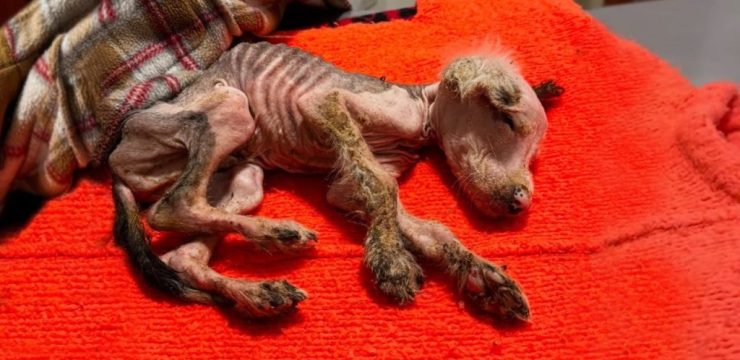
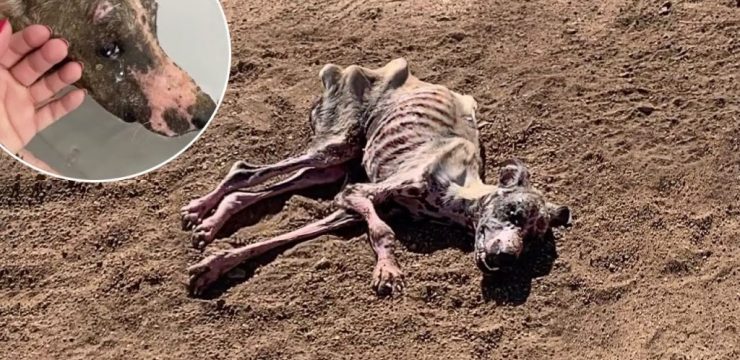
Elijah’s story began in a place no living creature should ever have to endure. He was found alone on a city street, abandoned and barely clinging to life after being used as a so called bait dog in illegal fighting operations. When rescuers first saw him, the condition of his small body told a painful story of prolonged suffering. Thousands of maggots covered open wounds across his skin, and his ears had been severely mutilated. He was weak, silent, and frighteningly close to death.
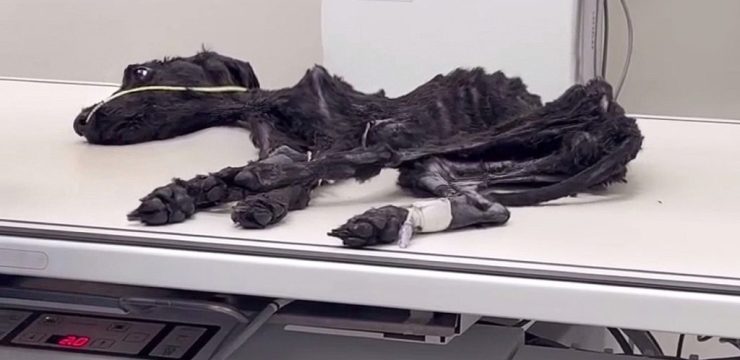
Despite the overwhelming condition he was in, rescuers did not hesitate. Elijah was rushed immediately into emergency surgery where veterinarians prepared for a long and delicate fight to save him. Every minute mattered. For more than four hours medical staff worked with intense focus, carefully cleaning infection from deep wounds and removing layers of damaged tissue. Some injuries were too severe to repair, forcing doctors to perform life saving amputations. It became a race against infection, dehydration, and shock.

The days that followed were filled with uncertainty. Elijah’s recovery would not be quick or easy. He required multiple additional procedures so veterinarians could remove remaining damaged tissue and prevent dangerous complications. Because he was far too weak to eat on his own, feeding tubes were placed to provide the nutrition his body desperately needed. Bandages wrapped much of his fragile frame and had to be changed constantly to reduce the risk of infection. Even small movements caused discomfort, yet every tiny sign of improvement felt enormous.
Caring for a dog in such critical condition requires more than medical knowledge alone. It demands patience, constant attention, and genuine compassion. Veterinary staff and caregivers monitored Elijah day and night, adjusting medications, cleaning wounds, and speaking to him in calm voices even when he seemed too exhausted to respond. In situations like this, survival is only the first step. The deeper question becomes whether a wounded spirit can endure what the body has suffered. Slowly, quietly, Elijah continued holding on.
What surprised everyone caring for him was Elijah’s gentle nature. After everything he had endured because of human cruelty, there was no anger in his behavior. Instead caregivers began noticing small but meaningful signs of trust returning. His tail would move slightly when someone approached. His tired eyes followed the quiet voices of the people helping him. Sometimes he rested peacefully when a caregiver simply sat nearby. Those soft moments reminded everyone that beneath trauma and pain, his sweet spirit was still alive.
By the fifth day of recovery Elijah achieved something remarkable. He began eating on his own. For most people that might seem ordinary, but for a dog who had depended on tubes and constant medical care, it marked a powerful turning point. Each bite meant his strength was returning and his body was stabilizing. It also showed that his determination to live remained strong. The veterinary team watching him felt a surge of hope they had hardly dared imagine before.
Within a few more days Elijah grew strong enough for doctors to remove several of the medical tubes supporting him. He became more alert and responsive to the people around him. With gentle assistance he was even able to stand for brief moments. The team that had fought tirelessly for his survival began to see something they once feared impossible: a real future for Elijah. His eyes looked clearer, his breathing steadier, and his resilience impossible to ignore.
Recovery, however, is rarely a straight path. Elijah experienced setbacks and difficult days when complications required additional treatment. Veterinarians continued monitoring his wounds carefully to ensure hidden infection did not return. Weeks passed slowly with follow up procedures, careful observation, and steady rehabilitation. Through every challenge Elijah kept fighting. His strength did not come from size or power but from a quiet determination that seemed to grow stronger with each passing day.
After thirty-eight long days of intensive care, surgeries, and unwavering support, Elijah finally reached a milestone many once feared he might never see. His wounds had healed, his strength had returned, and his spirit remained bright. The fragile dog who had been found alone on the street was now a living reminder of resilience and compassion working together.
But healing is not complete without belonging. Once Elijah was strong enough, rescuers helped him find a permanent home where safety and kindness were part of everyday life. In this new environment he slowly discovered simple joys he had never known before. He stepped into cool water and learned the pleasure of swimming. He chased toys across open grass instead of running from danger. At night he rested in warm comfort rather than fear. Most importantly he received gentle affection again and again, the steady love every animal deserves.
For many people who hear Elijah’s story, the emotions are mixed with heartbreak and hope. His past reveals the cruelty that still exists in parts of the world, yet his recovery proves the extraordinary difference compassion can make. Dedicated rescuers, skilled veterinarians, and patient caregivers came together and refused to look away when he needed help the most. Their efforts transformed what could have been a tragic ending into a powerful story of healing. Elijah’s journey reminds communities to stay alert to signs of animal abuse and to support rescue groups working on the front lines. It also reminds us that dignity can be restored and trust rebuilt when kindness leads the way forward for a life once forgotten.